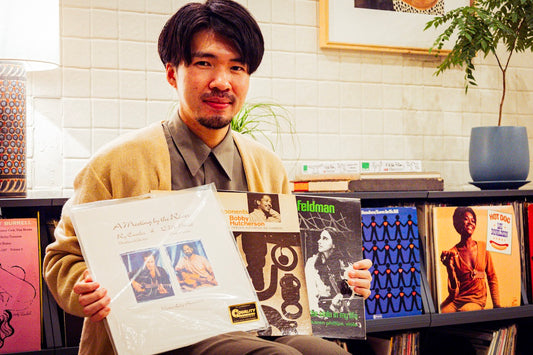
"WHAT'S IN YOUR CART?" is an interview series where we invite record-loving guests to choose '5 Records They Want Right Now' from the ELLA ONLINE STORE lineup.
This time, our guest is Masato Nishiyama of Pasocom Music Club, the DTM duo that has spent the past decade effortlessly navigating the ridgeline where club music and pop music meet, celebrating its 10th anniversary last year.
While carefully exploring every corner of the shelves at ELLA RECORDS VINTAGE, Nishiyama selected five records that span an impressively wide spectrum—from classic rock and alternative to electronic music and Japanese gems. He also shares his perspective on discovering vinyl as someone who grew up in the CD and streaming era, along with his thoughts on the unique appeal of records from an artist's point of view.
Masato Nishiyama's “5 Records I Want Right Now”
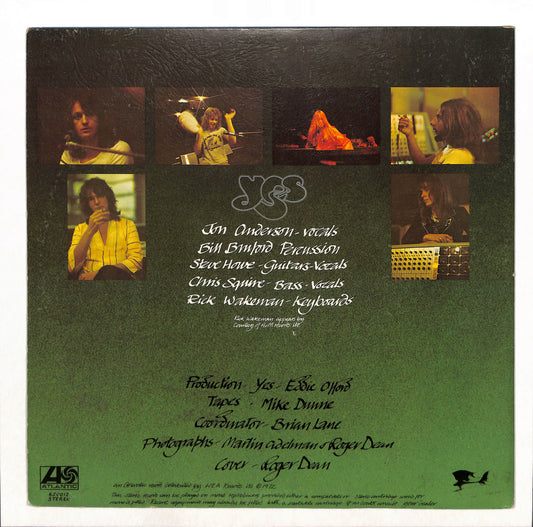
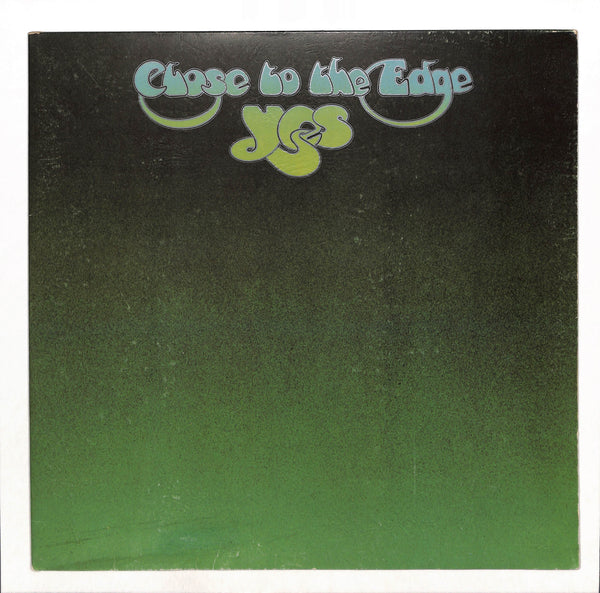
①Yes / Close to the Edge(1972)UK original
Nishiyama
I first got into music through the guitar when I was in junior high school, and that's how I fell in love with rock. Then, in high school, I became friends with someone who was incredibly knowledgeable about Western music. He introduced me to all kinds of records that were way beyond anything I'd heard before, and Yes was one of them. At the time, I didn't even know what progressive rock was. So when I first heard this album, I was completely shocked. The songs were over ten minutes long, and there were only three tracks on the whole record. I remember thinking, "What is this?!" But then I heard the opening guitar of "Siberian Khatru," and I was hooked. It was so bold and exciting. I spent countless hours trying to learn that guitar part. When I saw this album cover here today, all those memories from my school days came flooding back, so I had to pick it.
Later on, I heard Yes's 90125 (1983), which led me to discover producer Trevor Horn, then The Art of Noise, and from there I gradually found my way into electronic music. In that sense, I suppose Yes is where everything started for me.
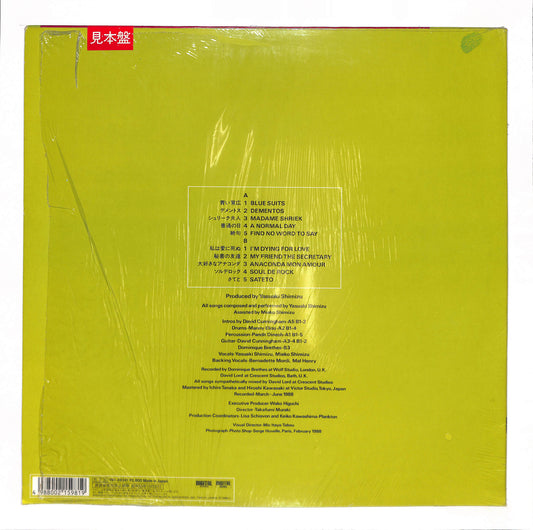
②Yasuaki Shimizu / Dementos(1988)JPN original
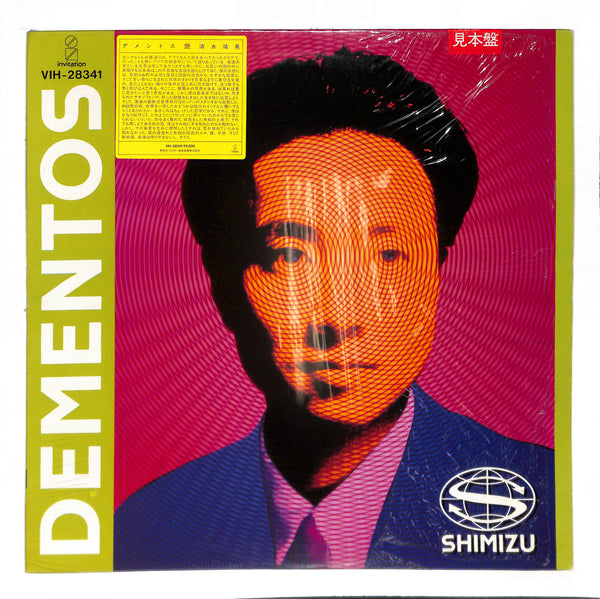
This is one of those albums that has never stopped amazing me since the very first time I heard it. It has this strong sense of exoticism—you can hear something African in it, something Southeast Asian too, yet it doesn't really belong to either. It's almost like the music of a country that doesn't actually exist. What's also fascinating is how incredibly groovy it is. Even though it's not driven by heavy bass, it still makes you want to move. It has this unmistakable dance music quality. I find it amazing that a Japanese artist created something with such a unique balance.
I'm really drawn to music that conjures up vivid landscapes, so whenever I'm making my own music, I'm always thinking, "What kind of scenery can I create through sound?" With this album, though, what's astonishing is that someone even imagined a landscape like this in the first place. I can't help wondering what was going through the artist's mind. Actually, looking at the sticker on the sleeve now, there's a poem printed on it. It says something like, "Standing shoulder to shoulder with Africans in a club, talking about a rural town somewhere in Asia I've never even visited." When you listen to the music, you can immediately tell that's exactly the kind of world he was trying to create. And the fact that he was actually able to bring that vision to life is incredible. I hope I can one day express my own imagination through sound as vividly as he does.
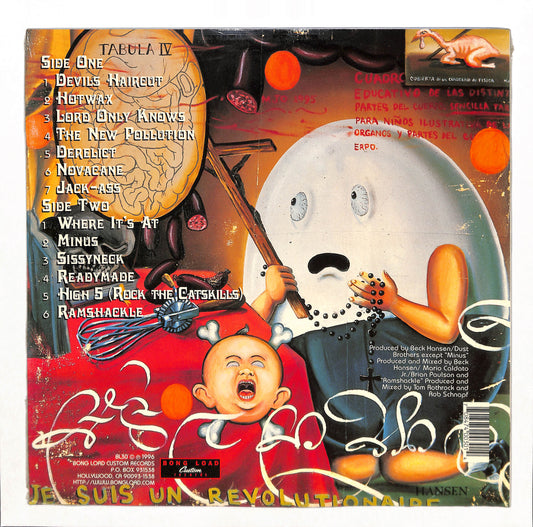
③Beck / Odelay(1996)US original
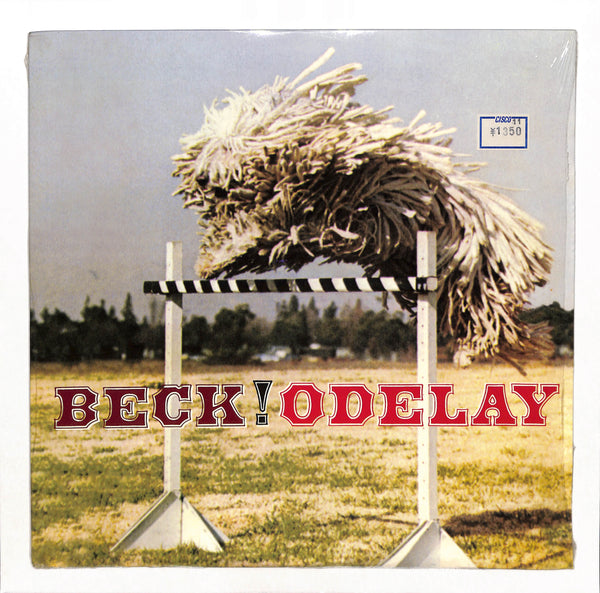
I'm a huge Beck fan, especially the albums produced with the Dust Brothers. To be honest, Midnite Vultures (1999) is probably my favorite, but if we're talking about the records they made together, I'd say Odelay is the more refined and fully realized album. What both records have in common is that they draw from all kinds of musical styles—rock, hip-hop, country, and so much more—yet they never feel like a random jumble of influences or a toy box that's been dumped out. Instead, everything comes together as one cohesive sound that simply feels like Beck. As someone who makes music myself, I really admire the way he can absorb such a wide range of influences while filtering them through such a strong artistic vision, turning everything into something unmistakably his own.
The way he approaches the album as a complete work is incredible, too. For example, he'll slip in a short sampled interlude between songs, almost like a skit, before seamlessly leading into the next track. It's not just the songs themselves—it's the taste behind those little sampled moments and the way they're woven throughout the record. The whole album feels like a single film, with its own narrative and atmosphere. It's more than just a collection of songs. In fact, while I was making FINE LINE (2023), I spent a lot of time listening to both Odelay and Midnite Vultures.
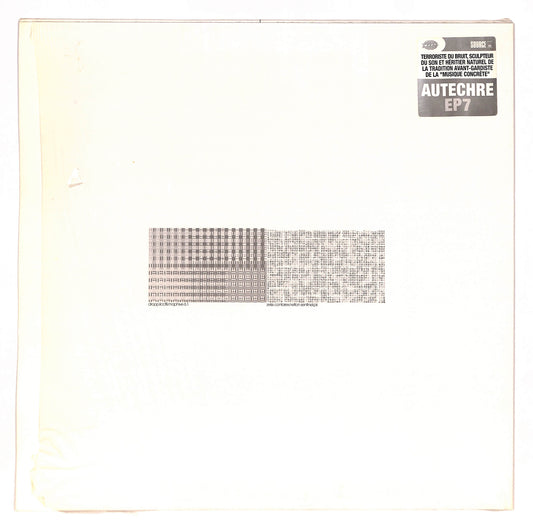
④Autechre / EP7.2(1999)12”/UK original
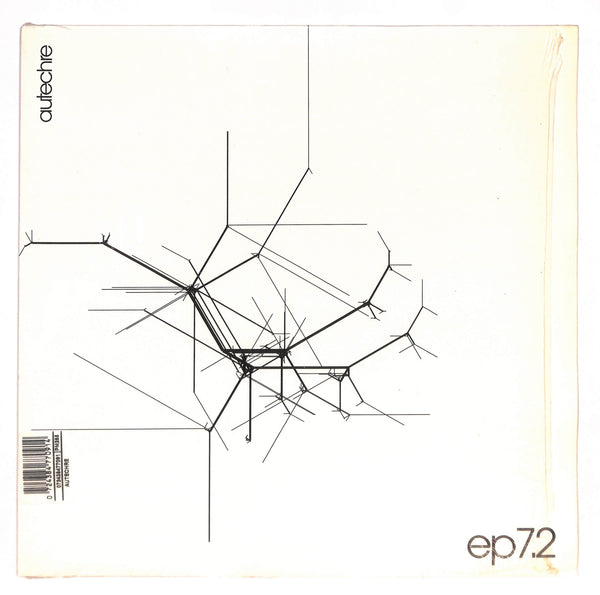
Lately, the more I listen to contemporary dance music and bass music, the more I realize just how profoundly Autechre shaped the sound of electronic music around the turn of the millennium. That's actually what led me to revisit their catalog myself. I think artists like Overmono have been directly influenced by them. They even played a B2B set with Autechre not long ago, and SOPHIE was also very open about the influence Autechre had on her. What amazes me is that Autechre's music from this period still sounds incredibly fresh today. Even compared to other electronic records from the same era, the production stands out. The sound quality, the sense of dynamics, the way compression is used, the spatial design—it all feels remarkably modern to me. At the same time, the music has a timeless quality and an extraordinary level of craftsmanship. These records simply never seem to age.
On a more personal level, I also admire Autechre from the perspective of a gear nerd. I'm really into synthesizers, so I often find myself marveling at the ideas behind their sound design or thinking, "How did they get that sound?" Sometimes I end up listening less to the composition itself and more to the synthesizer sounds, appreciating them almost as instruments in their own right.
⑤GONTITI / Physics(1985)JPN original
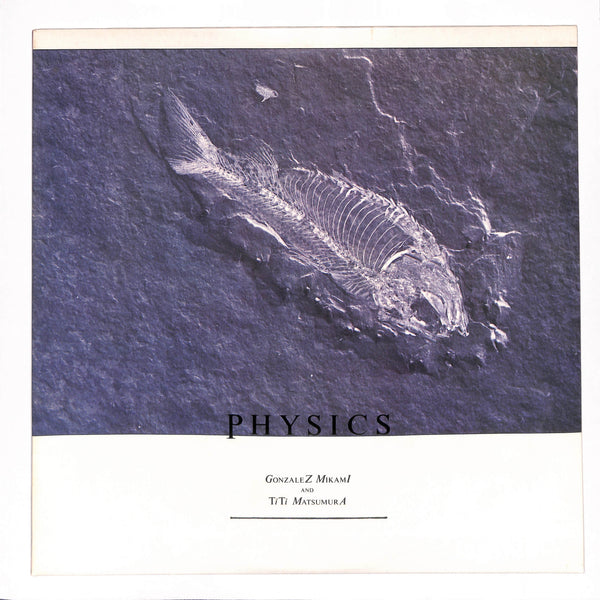
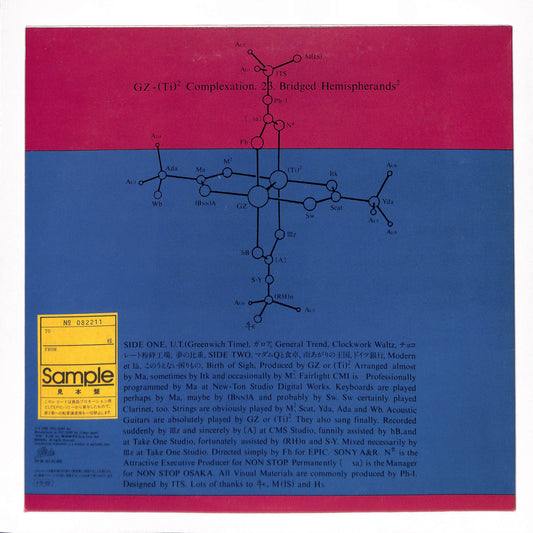
When it comes to Gontiti, their skills as guitar players speak for themselves, but what really impresses me is their production. In particular, Physics has an incredible level of craftsmanship—the sound design, the arrangements beyond the guitars, everything feels so carefully constructed. The artwork is amazing too. The back cover features what looks like a molecular structure diagram, and I love the album not only as music but also as a physical object.
Our album See-Voice (2021) was based around the theme of the ocean, so while we were making it, I looked to many different ocean-related works for inspiration. During that time, the album I listened to the most was Physics. What I paid the most attention to, however, wasn't actually the guitars—it was the reverb. It was the "tail" of the reverb, the lingering sounds that follow the end of each guitar note, that gave me such a strong sense of scenery and atmosphere. Around that time, I was also drawn to a certain kind of escapism. But unlike vaporwave, which often creates a hazy, lo-fi sonic world, Gontiti's music creates a sense of escape and ambience within a clear and solid sound. I was completely captivated by that delicate balance and listened to the album over and over again.
When we stayed at a hotel along the coast in Chiba with the other members while preparing to make the album, I listened to Physics while looking out at the ocean, and it was an incredibly emotional experience. That memory has stayed with me, and it's still an album I find myself wanting to return to every summer.
Interview : Masato Nishiyama and Record

━━ Looking at the five records you selected this time, it's such a diverse yet well-balanced selection that it's hard to believe they were all chosen by the same person (laughs). I have to admit, I was a little surprised to see Yes in the lineup. Did you also go through a phase of being into more classic rock?
Nishiyama: Since I first got into music through the guitar, I naturally started exploring rock when I was in high school. I got really into hard rock and technically impressive players (laughs). I started with bands like Rainbow, and eventually I moved toward the more virtuosic side of jazz fusion as well. Back then, I was really fascinated by highly technical guitar playing.
━━ Who were your guitar heroes at the time?
Nishiyama: Steve Vai and Joe Satriani, for example. The ultimate shred guitar heroes (laughs).
━━ That's pretty unexpected. So did you actually aspire to become a technically focused guitarist yourself?
Nishiyama: Yeah, I used to sit at home practicing those fast guitar runs over and over again (laughs). Then I formed a band with some friends for the first time, but when we actually went into the studio, I realized I couldn't play rhythm guitar at all. I was basically useless when it came to contributing to the overall ensemble (laughs).
━━ So the concept of rhythm guitar didn't even exist for you at that point (laughs).
Nishiyama: Exactly. The other members seriously got mad at me. They were like, "You're trying way too hard to be the one in the spotlight" (laughs). I was the classic embarrassing high school guitarist, right? It was really frustrating, and that's when I stopped focusing on playing fast solos (laughs).
But that experience actually made me realize how important percussion and rhythm are. I also started admiring guitarists who were great at funk-style rhythm playing. Looking back, I think that period was full of moments that really changed the way I saw music.
━━ So that's when you shifted toward becoming more of a rhythm-oriented guitarist?
Nishiyama: Not exactly. I never really spent much time seriously practicing rhythm guitar either. By that point, I was already starting to step away from performing in a traditional sense. I began to feel that maybe I just wasn't suited to being a player. And that eventually became one of the reasons I thought, "Maybe working with programmed sounds is a better fit for me."
After that, I rarely had the chance to form a proper band, and eventually I ended up creating a unit with Shibata, which led me to where I am today. I still play guitar, though.

━━ It was great to hear such an unexpected story (laughs). Now, let's move on to the topic of records. Pasocom Music Club is often associated with electronic music, but do you also have a strong attachment to more analog things?
Nishiyama: I think I probably do have a strong attachment to them. The same goes for music gear, but I definitely have a desire to own things physically when it comes to music as well. Since I'm part of the CD generation myself, I'm the kind of person who feels that it's nice to have some kind of physical medium—whether it's records, CDs, cassette tapes, or anything else. Among them, vinyl records are probably the most satisfying medium to own as a product, partly because of the large artwork. There's just something special about having them as physical objects.
━━ So do you buy records fairly often?
Nishiyama: I buy them from time to time. I might get scolded for saying this, but I often buy records even if I don't actually listen to them. I usually listen to the music through streaming. I feel like there's a certain number of our fans who buy records even though they don't own a turntable, and I can really understand that feeling. Of course, there are many people—including myself—who love the sound of analog formats compared to digital and find that to be one of vinyl's biggest appeals. But beyond that, I've increasingly come to feel that in this streaming era, the value of vinyl as a physical product has actually become greater than ever.

━━ Pasocom Music Club has been releasing their albums on vinyl since your first album, DREAM WALK (2018). Was that something you and Shibata had wanted to do from the beginning?
Nishiyama: Absolutely. Shibata and I had been talking about how it would be great to have our music available on vinyl from the very start. The person at ULTRA-VYBE, who was helping us with distribution at the time, also said, "This is the kind of music that should be listened to on vinyl." Back then, we didn't really have the knowledge or experience needed to produce records, so we relied on that person to handle the whole process. It was also a time when vinyl production was considerably cheaper than it is now, so perhaps the barrier to releasing records was lower. Thankfully, we were able to continue releasing our first, second, third albums, and beyond on vinyl. The production costs and lead times have gradually made things more challenging, but since we've kept this going for so long, I'd like to continue releasing our future albums on vinyl as well.
━━ So when you're creating an album, do you take things like the number of tracks into consideration with a vinyl release in mind from the beginning?
Nishiyama: Not particularly. When we're making music, we're very conscious of the album as a complete work, and we definitely put a lot of thought into the sequencing of the tracks. But we don't really think about things like where the A-side and B-side should split, or whether we need to keep the whole album under 40 minutes. We just focus on making what we want to make freely.
Nishiyama: However, every time we release one of our own records, I'm reminded of the various physical limitations that come with vinyl as a medium. For example, if you have too many tracks, the overall volume has to be lowered, and the outer grooves tend to sound better than the inner grooves. Working within those limitations while still achieving a powerful volume and high-quality sound requires a great deal of skill in cutting and pressing. That's why I think a lot of music from the era when vinyl was the primary format was created with those factors very much in mind. When you go back and listen to those records from that perspective, you can discover a lot of interesting things all over again.

Nishiyama: This actually reminds me of something—can I share a little side story? There's a type of music production software called a DAW, like Ableton Live, for example. In a DAW, each track is arranged vertically, one after another, kind of like rows in an Excel spreadsheet. Apparently, when DAWs were still relatively new, there were people who believed that the tracks placed higher up sounded better, while the ones lower down sounded worse, so you should put the most important sounds at the top (laughs).
━━ Even though it's digital? (laughs)
Nishiyama: Exactly. Obviously that's not how it works, but I guess they were so used to the limitations of the vinyl era that they couldn't completely shake off that way of thinking (laughs).

━━ Well, when it comes to music, the feeling behind it is what matters most (laughs). So when did you first encounter records?
Nishiyama: My parents were part of the generation that grew up with vinyl, so there were records at home from as far back as I can remember. But they were mostly typical Japanese pop records, and we didn't even have a turntable anymore, so they were basically just sitting there. I never had any particular interest in them myself.
━━ So what was the turning point that made you interested in records?
Nishiyama: It was after I became a university student. I had always listened to music on CDs, but I had a friend who was really into music and had a great sense of style. When I visited his place, he was listening to records—UK rock like Led Zeppelin, for example.
Looking back, the sound quality probably wasn't even that great, and maybe he was just trying to look cool (laughs), but to me it looked incredibly cool. He was playing music from that era on the medium that belonged to that era, and it produced a sound that was clearly different from digital formats. I remember feeling that was what made vinyl so appealing.
━━ So did you start buying records yourself after that?
Nishiyama: Yes, I started thinking that if I had the money, I'd like to buy music on vinyl whenever possible. But realistically, I couldn't always afford to (laughs). So while I was inspired by others and developed an admiration for records, it wasn't until much later that I started buying them regularly.

━━ Do you remember the first record you bought yourself?
Nishiyama: Hmm, let me think... It was definitely from Hard Off. I wasn't looking for any particular record. Back then, Hard Off had huge numbers of 100-yen records, so I would just go there and browse through them.
I think I picked up some obscure ambient techno white label. It came in a plain white sleeve, with the title written in English by hand on the label with a marker. Something about it caught my attention, so I bought it. It was only 100 yen, after all (laughs).
Then I listened to it and, even though I knew absolutely nothing about that genre at the time, I remember thinking, "This is amazing!" (laughs). But when I searched for it on Discogs, nothing came up. Maybe it really was a record made by some amateur. I can't even remember the title anymore, but I think it's still at my parents' house.
But experiences like that were part of the fun. It's something you could never have through streaming.
━━ How often do you visit record shops these days?
Nishiyama: These days, I mostly buy records online, so I don't really go to shops that often anymore. Occasionally I'll stop by Disk Union, but that's about it. Independent record stores usually have such strong curation, so I often buy from their websites while listening to the samples. Places like JET SET and Newtone Records in Osaka, for example. I haven't really been able to take my time digging through records in stores lately, so maybe this experience is a good opportunity to get back into it (laughs).
━━ How many records do you currently own?
Nishiyama: I left quite a lot of them at my parents' house, so I don't have that many where I live now—probably around 40 or 50 records. I don't DJ, so they're all for listening.
━━ What kind of records make up your collection?
Nishiyama: About half are new releases by current artists. Some of them are still unopened because I can listen to them on streaming anyway (laughs). The rest are albums I love that aren't available on streaming, or classic records that I feel are important to have in my own collection. I have a lot of Japanese artists—things from the Happy End scene, Ryuichi Sakamoto, Rei Harakami, and so on.

━━ So when you listen to records, are they mostly things that aren't available on streaming?
Nishiyama: Yes, that's a big part of it. Also, I often listen to records for music that doesn't feel "streaming-oriented" to me. One album I revisited recently was Tasho Ishi's Dentsu2060 (2019). He's a Japanese artist who released music through Lorenzo Senni's label, <Presto!? Records>, and his sound has this post-trance quality. It might actually be available on streaming too, but it's the kind of music I naturally want to experience on vinyl.
━━ What's currently at the top of your vinyl wantlist?
Nishiyama: Oh, that's a tough one! Hmm... If we're talking about something that's not on streaming, I'd probably say Skee Mask's work. He's a German techno artist who is still actively releasing music. His sound is very modern—exactly the kind of music you'd expect to find on digital platforms—but for some reason, his albums aren't really available on streaming. So it's not necessarily one specific title. If I came across a Skee Mask record at a shop, I'd probably just buy it.
━━ Are there any genres you're particularly searching for or into at the moment?
Nishiyama: Actually, it's very much in the same direction as the Gontiti record I picked today. Something that's rooted in an AOR sensibility, but with a more cinematic and electronic texture. Not just light music, but something that feels carefully recorded with a strong sense of post-production. Things like the reverb on Gontiti records or the programmed drums on Hiroshi Sato's work—I'm drawn to music that has some kind of electronic element woven into it. If I find something like that, I'd love to own it on vinyl. But everyone has already caught on to that sound, so those records are usually pretty expensive now (laughs). I feel like there must still be hidden gems out there that people haven't discovered yet, though.
━━ Are you particular about owning original pressings?
Nishiyama: I feel a little bad saying this, but honestly, I've never really thought about it (laughs). I always just buy whichever copy is cheaper (laughs). That said, I can definitely understand why people who are really passionate about vinyl choose original pressings. It's not something I've personally pursued, but I understand the feeling behind it. I do have very strong preferences when it comes to music equipment. For example, there's always the question of how far you should go with clone gear. If the original hardware is a rare piece that costs 500,000 yen, I can understand choosing a clone instead. But at the same time, I don't really want to buy cheap, careless imitations. I think that mindset is probably connected in some ways to the desire for original pressings in the vinyl world as well.

━━ Do you ever draw inspiration from vinyl records in your own creative process, whether it's for the sound or the artwork?
Nishiyama: Definitely. When it comes to artwork, vinyl records are by far my biggest source of inspiration. At the same time, though, there's a real dilemma. With an LP, you have this large canvas to work with, so you can be much bolder. Intricate details are still visible, you can incorporate all kinds of physical gimmicks, and even a simple one-color design can become expressive through the texture of the paper itself. With streaming, on the other hand, the artwork is displayed so small that it has to be immediately recognizable and visually striking at thumbnail size. Deciding which of those priorities to design for is something I wrestle with all the time.
━━ I imagine a lot of artists are dealing with that same dilemma in the streaming era.
Nishiyama: Exactly. Of course, album artwork is deeply connected to the music itself, so first and foremost I want to create covers that I genuinely think look great. But at the same time, it's impossible to completely ignore the marketing side of things. Still, when you only see an album cover at streaming size, you might get a rough idea of what the music sounds like, but you lose so much of what makes the artwork special. Take the original pressing of the Yes album we talked about earlier. The subtle green gradient and the texture of the paper are just beautiful. Then there's the surprise of opening the gatefold and discovering a completely different visual experience inside. Those are things you'd never notice unless you were actually holding the record in your hands. I think that's probably part of the reason why some people buy vinyl even if they don't own a turntable. 
━━ Album artwork is definitely one of the things that makes vinyl so special.
Nishiyama: Absolutely. And there's one more thing I really love about vinyl from a creator's perspective: the track sequence is essentially fixed. Once you drop the needle on the first track, the listener experiences that entire side in exactly the order the artist intended, right through to the end. These days, I feel like fewer and fewer people listen to albums as complete works. I do it myself sometimes—I end up listening to individual singles rather than sitting down with a full album. But whenever artists make an album, I'm sure they're thinking very carefully about the journey from the opening track all the way to the last one. They probably spend just as much time refining the transitions between songs as they do the songs themselves.
━━ That's really the magic of an album, isn't it? Maybe there's a short instrumental tucked away, or a quieter track that might seem understated on its own but plays an important role within the flow of the record.
Nishiyama: Exactly. These days, fewer artists even make intentionally brief interludes, and personally, I think that's a shame. I'm definitely someone who wants to include interludes whenever I can (laughs). What I love about vinyl is that it preserves the artist's intentions from beginning to end without interruption. From the moment you drop the needle until it reaches the run-out groove, that stretch of time belongs entirely to the music. I think there's something really beautiful about that. It's an experience that's much harder to recreate in the digital world.

━━ Finally, what makes a great record shop in your eyes?
Nishiyama: First of all, it shouldn't feel too intimidating. Out of all the guests you've interviewed for this series, I honestly think I probably know the least about vintage records. But even so, I still want to visit record shops, and I still want to buy records. That's why I get nervous walking into those "arms-crossed" shops that give off the impression of "Only people who really know their records belong here." In places like that, I end up buying online instead (laughs). That said, a shop that's too approachable and doesn't have any real point of view isn't very interesting either (laughs). A good record shop should have a carefully curated selection, where every visit introduces you to something you didn't know before. So for me, the ideal record shop is one that strikes the perfect balance: welcoming enough that anyone feels comfortable walking in, but curated well enough that you know you'll discover something special.
Interview & text: Mikiya Tanaka (ELLA RECORDS)
Photo: Shinnosuke Chiba (ELLA RECORDS)
Interview location: ELLA RECORDS VINTAGE
Furniture design & production, Interior coordination: "In a Station"
Special thanks to: Satoshi Atsuta