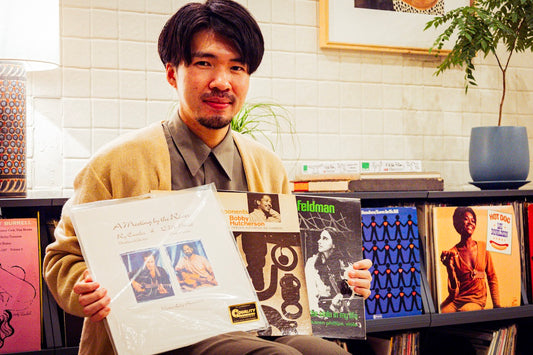
"WHAT'S IN YOUR CART?" is an interview series where we invite record-loving guests to choose '5 Records They Want Right Now' from the ELLA ONLINE STORE lineup.
For this interview, we were delighted to welcome Ikuko Harada, who continues to captivate music fans with her extraordinary voice and piano—both as a member of clammbon and as a solo artist—while also demonstrating remarkable versatility through a wide range of collaborations and songwriting projects.
The moment Harada stepped into ELLA RECORDS VINTAGE, she began selecting records with visible excitement—pulling one after another from the shelves, admiring the jackets, checking track listings, and asking questions of the staff. As the stack of records on the table grew and her deliberation deepened, she ultimately settled on a clear theme: records she has long loved and would like to experience as original pressings on this sound system.
Adjusting the amplifier volume and balance herself, she listened with pure, unfiltered joy—so genuine that it was impossible not to feel happy just watching her. After choosing her five records, Harada shared with a smile, “Being here today feels like so many things have been washed away,” clearly delighted by the experience.
Ikuko Harada's “5 Records I Want to Listen to Here”
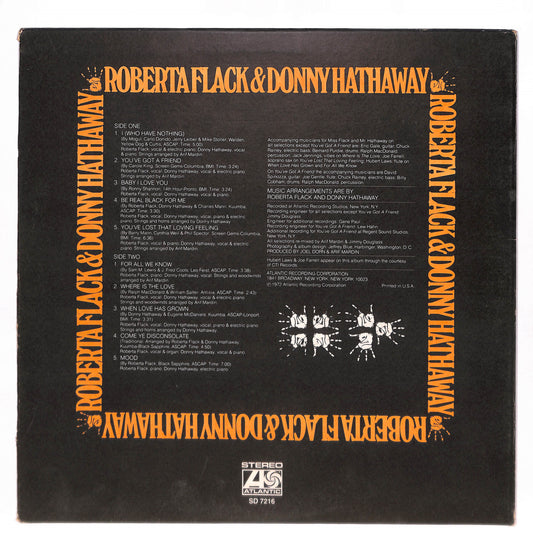
①Roberta Flack & Donny Hathaway / S.T.(1972)US original/Promo
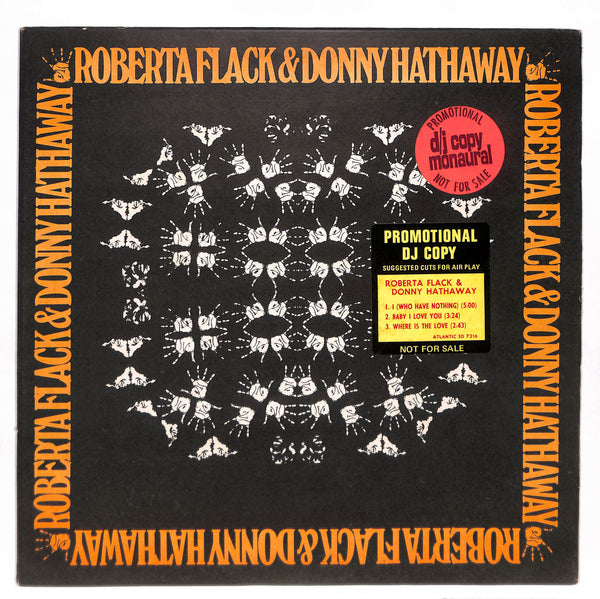
First is the duet album by Roberta Flack and Donny Hathaway—a true classic that needs no introduction. Earlier, you played “You’ve Got a Friend” for me, and it made me so happy. The electric piano in the intro sounded absolutely dreamlike. Roberta Flack’s voice is, of course, wonderful, but the moment Donny Hathaway comes in with that “Huh〜”—the vibrato in his voice… It had such three-dimensional presence that it felt like Donny himself might step out of the speakers (laughs).
Both Roberta and Donny are musicians who sing while playing the keys, and I love them deeply as both pianists and vocalists. This song, in particular, means a lot to me—it was the very first song the three members of clammbon ever played together. During that first performance, the instrumental section between the vocal parts gradually became more and more free, and it felt as if we were having a conversation through our instruments. That experience became a turning point… bringing us to where we are today. I skipped ahead in time all at once there (laughs). But honestly, if that initial feeling hadn’t been so good, I don’t think we would have been able to continue as a band for this long.
There’s another episode I’ve mentioned in past interviews, but when I went back to my family home in Fukuoka for the first time, I was listening to a cassette of this album. My mother came into the room and said, “This song brings back memories.” I asked, “You know it?” and she told me it was one of her favorite songs. When I asked when she used to listen to it, she said it was from before I was born—that she loved it even when she was pregnant with me. Then she pulled this very record out from our family’s record shelf. I was completely shocked. For a parent and child with totally different tastes to both love the same song—I remember thinking how incredible that was, in yet another way.
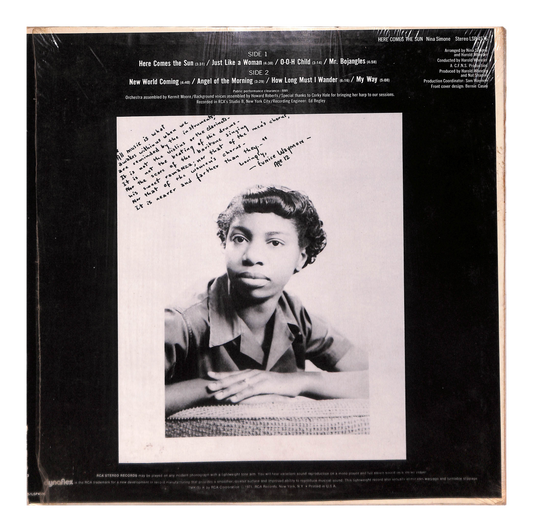
②Nina Simone / Here Comes The Sun(1971)US original
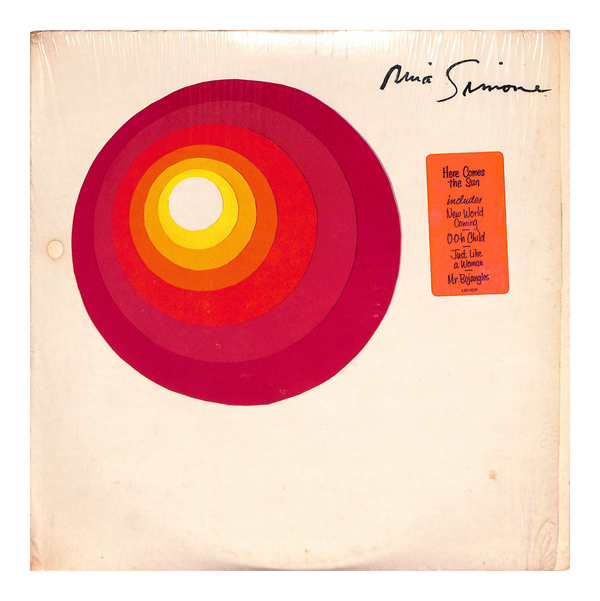
Since I was told there are so many original pressings here, I knew I couldn’t not listen to Nina Simone. When you played “Mr. Bojangles,” tears slowly started to well up. Dropping the needle, the sound coming to life, the feeling that the entire room was vibrating— I remember thinking, “This feels unbelievably good.” Albums like this—where the performance, the recording, and the songs themselves are all exceptional—sound great in any environment. They’re wonderful no matter where you listen. But being able to savor this thick, full-bodied sound and her vocals on an original pressing, in a place like this… it’s irresistible. I want to listen to every Nina Simone album you have here, one by one. Please, make that happen as an event.
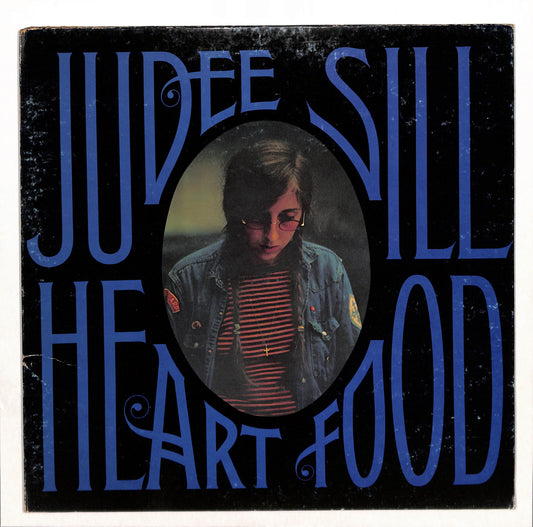
③Judee Sill/Heart Food(1973)US original
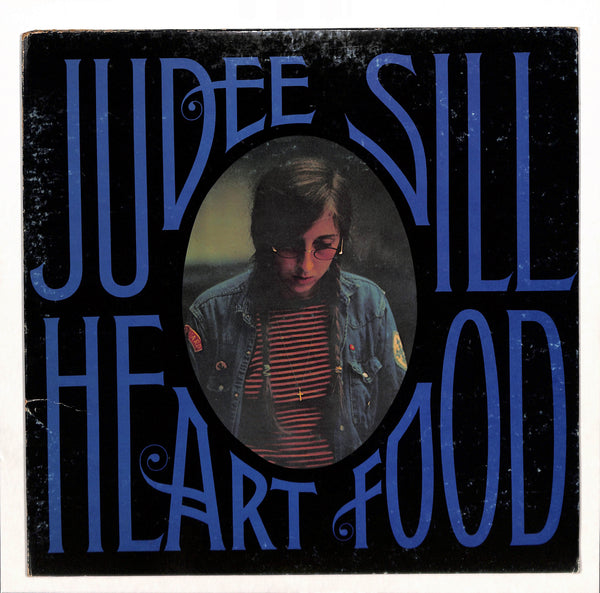
From this album, you played “The Kiss” for me. Mmm… the atmosphere changes instantly. Her delicacy comes through much more vividly. When the strings come in, I felt my body almost lift off the ground—like I was floating.
I first learned about Judee Sill through mito, a member of clammbon. Around the time the album Dreams Come True (※), mixed by Jim O’Rourke, was released, mito heard it playing in a Tower Records store and was apparently completely blown away. Later on, clammbon covered her song “That’s The Spirit” (included on the album LOVER ALBUM). I hear that a documentary film about Judee Sill is set to be released soon, so I’ve been listening to her a lot again lately.
※ Unreleased recordings made during her lifetime for a planned third album were mixed by Jim O’Rourke and first released in 2005 by the US reissue label Water.
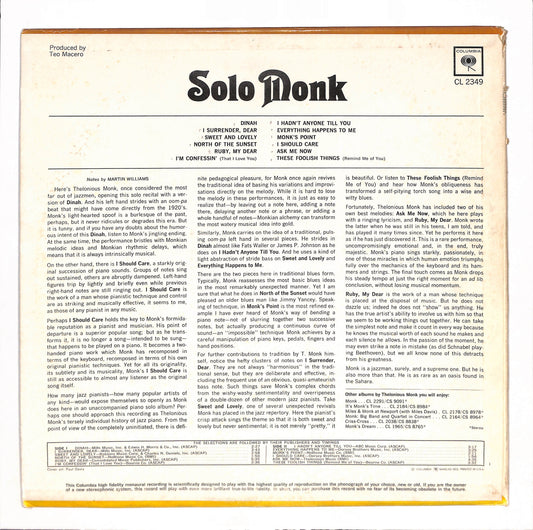
④Thelonious Monk / Solo Monk(1965)Mono/US original
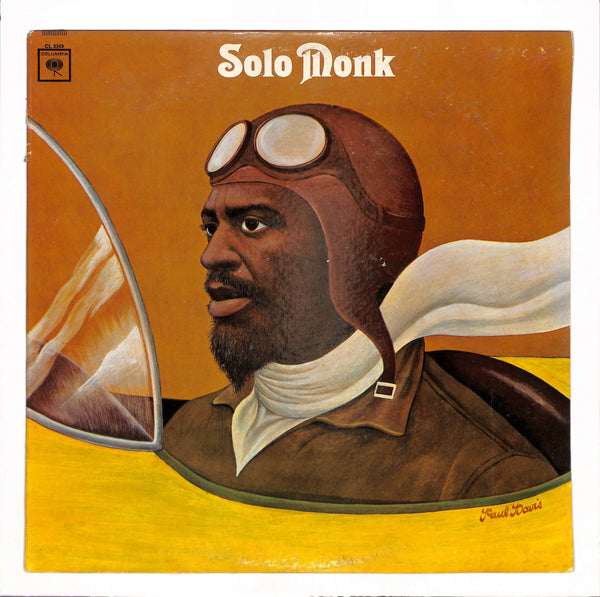
When it comes to wanting to hear original pressings, I inevitably find myself choosing the most fundamental albums. Someone who changed me, my favorite pianist, and a musician who became a gateway to everything that followed—Monk is simply indispensable.
The way he strikes the keys, the sheer force of his touch—it comes through with a BANG! so directly that it feels as if splashes are flying out of the speakers, like sweat bursting into the air (laughs). In Monk’s playing, there’s a rhythm that belongs to him alone—within that rhythm, it’s as if intricate patterns and colors are hidden, something almost psychedelic. Especially when he’s playing piano solo, Monk feels as though he’s in an unfathomably deep place, and that sense of freedom makes me truly happy. And this jacket—how cool is it? That’s something you can really savor precisely because it’s a record.
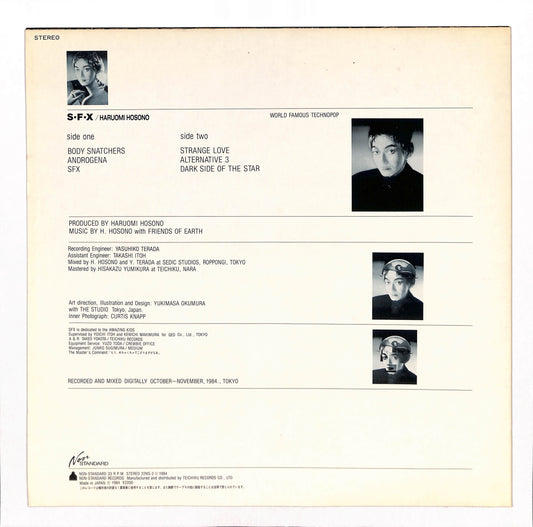
⑤Haruomi Hosono / S・F・X(1984)JPN original
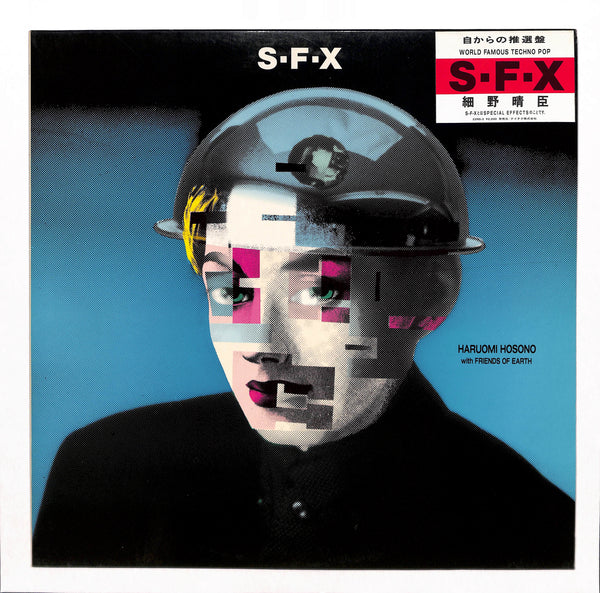
There were several Hosono albums here, so I had a hard time choosing, but I picked this one because I really wanted to hear the opening track, “BODY SNATCHERS,” in this space. It woke me up instantly—bam! The sound was unbelievable (laughs). The sheer thickness of it! I was excited the whole time. The sound bursts out from all directions, and your body just starts moving on its own. Listening to this on a stream versus being drenched in big sound from speakers—it’s a completely different physical experience.
Once again, I’m reminded that Hosono-san’s music is full of innovation—each individual sound is unique, brimming with playfulness. Right now, I’m supporting Hosono-san’s live performances as part of a five-piece group: myself, Manami Kakudo with our project “kukuku,” and Yuta Hosono with his project “Chappo.” It’s been incredibly fascinating. We’ve played “BODY SNATCHERS” live as well, but the original version really has the sharpest edge.
Interview: Ikuko Harada and Record

━━Could you tell us about your first encounter with records?
Harada: When I was little, I listened to collections of anime theme songs and records from Minna no Uta, children’s music program. There was also a record-and-picture-book set called The Sorcerer’s Apprentice that I absolutely loved—I played it over and over again. The first record I ever bought myself was Seiko Matsuda’s “Tenshi no Wink” (1985), which I purchased with New Year’s gift money.
━━When did you experience a more serious musical awakening?
Harada: Hmm… I wonder when that awakening really happened. I transferred schools in sixth grade, and around that time, it feels like the way I heard music changed all at once. The depth at which it entered me shifted—sounds and words started to really sink in. At first, I was listening to whatever was popular, but then I was shocked by The Blue Hearts and The Timers led by Kiyoshiro Imawano. From there, I gradually began to immerse myself in music more actively.
━━When did you start consciously buying records yourself?
Harada: That would be when I entered high school and started working part-time. Back then, I began frequenting used record shops in Tenjin, Fukuoka.

━━Were you deeply immersed in playing the piano alongside all of this?
Harada: No—actually, I had already quit piano by then. I’d lost any real sense of motivation. But when I was a first-year high school student, I heard Thelonious Monk for the first time, and it completely shocked me. After that, I went from record shop to record shop, buying Monk’s albums one by one and listening to them over and over again. Solo Monk, I chose today and Thelonious Alone in San Francisco are especially important to me.
Monk’s piano playing isn’t something you can simply imitate; if you ask whether I could play the same way, there’s no way I could. But there’s something in his music that makes you want to try playing the piano in your own way.
━━So that’s what led you back to the piano—thanks to Monk, in a way.
Harada: Exactly. After graduating from high school, I moved to Tokyo and enrolled in a music vocational school.
━━That’s where you met the other two members of clammbon, right?
Harada: Yes. I still love my hometown of Fukuoka, and I always feel at ease when I go back, but at that time I felt cornered—like this was my only option. So I decided to enroll in the jazz department. At first, I lived in a women’s dorm, where Ayaka Kushibiki and Yukari Yamazaki from Kuki Kōdan were also staying. There was a huge tatami-floored audiovisual room in the dorm with a lone stereo sitting there, and every now and then Kushibiki and I would listen to each other’s records. We’d say things like, “Let’s get out of here soon,” “Yeah, seriously,” while we listened.
━━Since you entered the jazz department, were you initially planning to pursue jazz?
Harada: I was, but I hit a wall pretty quickly. I just couldn’t play the way I wanted to. In the midst of that, I gradually realized that what I really loved was the piano of people who sing while they play—Roberta Flack, Donny Hathaway, Carole King, Nina Simone, Tom Waits. So I approached Daisuke Ito and mito and said, “I’d love to try playing ‘You’ve Got a Friend.’”

━━In a school like that, there must have been a lot of people who loved records. Do you have any memories from that time related to records?
Harada: There were so many interesting people around. Takashi Nagazumi from Hanaregumi was a year above me, Ken Kurihara—who now plays saxophone in SOIL&"PIMP"SESSIONS—was in the same class, and TOMOHIKO, who was a member of SUPER BUTTER DOG, among others. None of us had much money, so we were constantly lending each other records, cassettes, and CDs. When you went over to someone’s place, the first thing you’d do was check their record shelf. Just like a bookshelf, it tells you so much about a person—it’s fascinating.
After graduating from vocational school, I worked part-time at a bookstore in the basement of Bunkamura in Shibuya. On my way to and from work, I used to stop by HMV, Tower Records, and small independent record shops all the time. I still remember when Fishmans’ Uchū Nippon Setagaya was released as a new title—the sight of it lined up on the shelves, and thinking what an incredibly cool cover it was. Even now, when I walk around the area from Shimokitazawa to Ikenoue—where ELLA RECORDS VINTAGE is located—I still feel Sato-san’s presence. I’d occasionally run into him on the street—sitting in front of a closed shop shutter smoking a cigarette, or standing next to his parked motorbike. I remember brief exchanges like, “Oh, Sato-san.” “Hey.” “I’ve been listening to your new album a lot.” “Thanks.” This neighborhood is that kind of place for me.

━━What does the record as a medium mean to you, Harada?
Harada: It’s always been something I’ve admired from afar. Each time a new format came along—CDs, MDs, iPods—the way we listened to music changed. Now we can enjoy music through streaming services and YouTube. Still, records have an unshakable presence, both sonically and as physical objects. Today’s world is incredibly convenient and fast, but before you even listen, you’re confronted with play counts and follower numbers. I’ve never been comfortable with numbers coming first. With records, the moment you see the jacket, your antenna reacts—“I might like this.” I love that feeling of encountering music without any prior information. Sometimes you think, “Hmm, not quite,” and other times, “Wow, this is amazing.” I really value that intuitive kind of encounter. And then there’s time embedded in them—that’s huge. Worn jackets, scratches on the vinyl. Noise and grime can actually be a joy.
━━So when clammbon’s work was finally released on vinyl, it must have been deeply moving.
Harada: It truly was. We used to say it wasn’t a long-cherished dream but a long-held wish to see our music pressed on vinyl. In 2019, starting with our debut song “Hanare Banare,” we released “Pan to Mitsu wo Meshiagare,” “Chicago,” and “Surround” as 7-inch singles, and then had our albums pressed on vinyl in order, beginning with JP. And in January next year, we’ll finally be able to release LOVER ALBUM and LOVER ALBUM 2, our cover albums, on vinyl. I’m truly happy about that.

━━Do you still visit record shops often these days?
Harada: Yes, I do. This summer, when I was in London, I was wandering around the neighborhood while my laundry was going at a laundromat, and I came across a small record shop. When I glanced around inside, I noticed an African music record displayed above the clerk’s head behind the counter. I walked straight in and asked, “Could I listen to this?” and they played it over the shop speakers. Almost as soon as it started, I thought, “I love this,” and bought it. I wonder how long that whole encounter lasted—it felt like I was drawn in and met it in an instant. At the time, I was wearing a Hosono cap, and the clerk told me, “I’m going to see his concert.” Their partner turned out to be a Japanese musician in a band, and after exchanging messages, I was able to meet them later on. That kind of encounter—it’s really nice, isn’t it?
━━About how many records do you own now?
Harada: Um… I have no idea. I’ve never counted them. Almost all of them are kept at my parents’ house, and at my place in Tokyo I probably only have our band’s records and the latest release by Kazumi Nikaido. It’s a single that was released on 7-inch, and I helped out with it as well. Her voice and sound are even more wonderful when you listen on vinyl, so I really hope people will give it a listen.
━━Today you intentionally chose only original pressings—do you usually have a strong preference for originals when buying records?
Harada: Not particularly. But there are a few albums I love so much that I own multiple copies, and I’ve listened to them side by side, or compared subtle differences in the jacket photos and colors—that kind of thing. These days I often listen to music via streaming, so for me, records are a luxury reserved for moments when I really want to listen properly—when I think, “Alright, I’m going to listen to music I love.” Listening to original pressings on the sound system here today reminded me all over again that sound is literally air vibrating. It made me realize that rather than focusing on fine details, I may have always listened to music in a more spatial way—experiencing it as a whole environment.
━━What does a “good record shop” look like to you, Harada?
Harada: A place that makes you feel excited the moment you walk in—somewhere that gives you the sense, “I feel like I’m going to find records I love here.” When I was a teenager, I was able to listen to so many records in shops and discover all kinds of music, so I hope record shops will continue to be places where those kinds of encounters can happen.
Interview & text: Mikiya Tanaka (ELLA RECORDS)
Photo: KenKen Ogura (ELLA RECORDS)
Interview location: ELLA RECORDS VINTAGE
Furniture design & production, Interior coordination: "In a Station"
Special thanks to: Satoshi Atsuta